Norms for Marriage # The pastor of a parish is the father of his spiritual family and has certain responsibilities toward his children. That is why the faithful call their parish priest “Father” (Abouna). As such, it is the priest’s duty to remind the engaged couple that among their other responsibilities, spiritual ones must play a major role. For this reason, the following norms have been established.
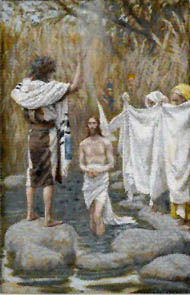
Baptism is the first of the Mysteries (Sacraments) of the Church to be received. It opens the doors to the Christian Faith and to the other Mysteries (Sacraments). Without Baptism, none of the other Mysteries (Sacraments) of the Church could ever be received.
Baptism is truly the welcoming of a child into a new “family,” the family of Jesus Christ. In this way, the Virgin Mary also becomes a loving mother for the child, and all baptized Christians throughout the world become the child’s “brothers and sisters.” More specifically for us, Baptism is the formal reception of a new member into our Catholic family, our Maronite family, and on the local level, our parish family.
There are wonderful privileges in belonging to a family just as there are also responsibilities. Among those responsibilities, parents need to provide food, shelter and clothing for their children along with a proper up-bringing and an education. All of this is done out of love because parents want their children to grow up to be fine and outstanding adults.
The pastor of a parish is also the father of his spiritual family and has similar responsibilities toward his children. That is why the faithful call their parish priest “Father” (Abouna). In the case at hand, the Baptism of children, it is the priest’s duty to remind the parents that among their other responsibilities, spiritual ones should also play a major role.
The spiritual responsibilities of parents toward their children are by no means so simple as to just ask the priest to Baptize them. Because we are dealing with infants, the entire responsibility of the Faith and a commitment to that Faith falls on the parents first and foremost, and then, secondarily, on the sponsors (more commonly called Godparents.)
The Catholic church insists that parish priests see to it that parents (or at least one of them) take all of their spiritual responsibilities seriously before Baptizing an infant. In the celebration of the Mystery (Sacrament) of Baptism, the priest plants the “seed” of the Faith and he must be morally convinced that the parents will “water” that newly planted seed. Otherwise, there is the risk that the seed will die. The priest cannot take that risk because the proper care and administration of the Mysteries (Sacraments) is his responsibility just as the overall care of the child is the parents’ responsibility.
In light of all that has been stated, the parish priest must make his determination based on what he has witnessed and on information to which he has access. More specifically, he must see if the parents are registered parishioners of his parish. In and of itself, that shows at least that the parents have the intention of being a part of the local “family of Faith.” Through parish registration, parishioners have the privilege of receiving all of the spiritual benefits offered by the Church through their parish priest. Of those, the most important, of course, is the reception of the Mysteries (Sacraments). On the other hand, a registered parishioner is also bound by certain obligations: attending the parish church on a regular basis thereby contributing to the spiritual bond which ties the parish family together, and using the weekly offering envelopes thereby contributing to the temporal responsibilities of the parish.
Godparents must also be responsibly chosen by the parents. The Church teaches that they must “help the Baptized person lead a Christian life in harmony with Baptism and to fulfill faithfully the obligations connected with it.”